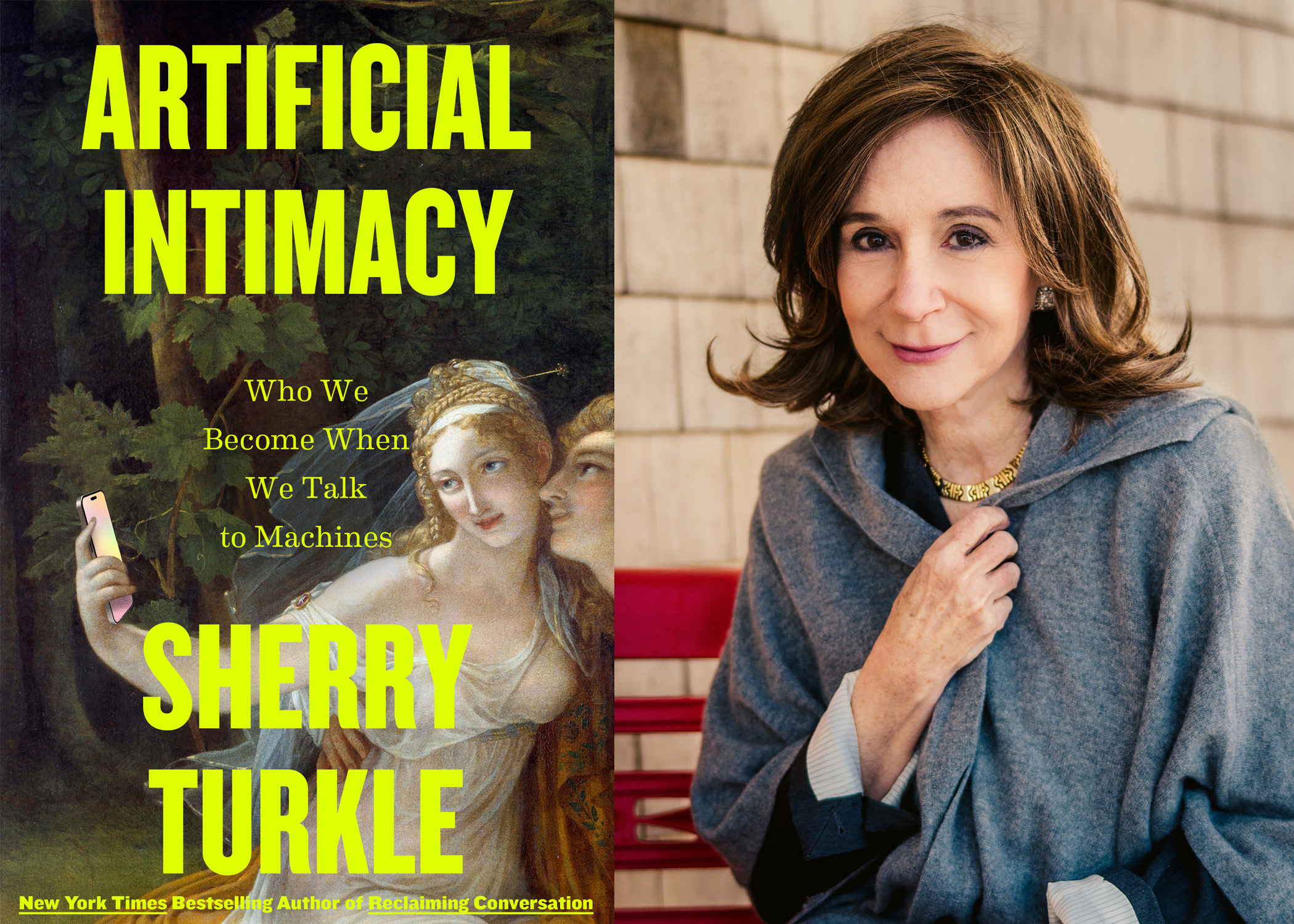
Brian, a middle-aged financial consultant, spends his day sitting in front of three screens. Two of them involve his job. The third features a chatbot, which he has given a woman’s name and frequently uses. Brian spent years on the road for work earlier in his career, has never married, and recently broke up with a woman who said he was emotionally unavailable. What did Brian do, in response? He asked the chatbot if the woman had a point. “It’s an extraordinary moment,” writes MIT Professor Sherry Turkle, who interviewed Brian (not his real name) while conducting her research for her new book about chatbots. “Brian asks an object with no emotions to tell him if he is emotionally withholding: ‘Speak to me about what you cannot experience.’ As soon as he asks the program to talk about intimacy, he’s asking it to punch above its weight.” And yet, this kind of thing seems to be happening a lot today. “People think the empathy of a machine is what empathy is, then turn away from the people in their lives because they’re not empathetic enough,” Turkle says. “We’re getting ourselves in a position where human beings are too much work, right at the moment when we have never needed other people more.” After all, what is a chatbot? It’s a computer program predicting the most plausible next string of text in a conversation, based on massive amounts of data fed into it. “What a chatbot does is offer pretend empathy,” Turkle says. “After it tells you how much it loves you and how much it understands you, it doesn’t care if you kill yourself or cook some pasta.” Sadly, chatbots have in fa
Source: MIT News AI