Kurdish Text Processing
Normalization, tokenization, spelling support, linguistic analysis, information extraction, semantic search, and text-generation workflows.
Open normalizer
Kurdish Speech develops practical artificial intelligence solutions for Kurdish text and speech processing. By combining machine learning, natural language processing, speech technologies, and advanced signal processing, we design and implement intelligent systems for speech recognition, speaker recognition, voice commands, text analysis, language understanding, and other Kurdish-language applications.
Beyond research and experimentation, we provide end-to-end AI project development—from requirements analysis and data preparation to model development, API integration, deployment, and the creation of production-ready tools. Our solutions are designed for researchers, organizations, developers, and businesses seeking reliable AI-powered products tailored to real-world needs.
Through intelligent tools, specialized resources, and applied AI solutions, Kurdish Speech is helping bring the Kurdish language into the next generation of text-based, voice-driven, and intelligent digital experiences.
We design the data pipelines, models, APIs, and user experiences required to move an AI idea into a dependable tool.
Normalization, tokenization, spelling support, linguistic analysis, information extraction, semantic search, and text-generation workflows.
Open normalizerMachine learning, language models, retrieval, classification, and intelligent automation adapted to Kurdish content and practical needs.
Discuss a solutionEnd-to-end implementation of data workflows, secure APIs, web tools, evaluation systems, and maintainable production services.
Build with usPractical Academy lessons, research references, library documentation, and learning resources for students, researchers, and developers.
Visit the AcademyWe begin with dialect, script, audience, data availability, and the real task the technology must support.
Sources, datasets, assumptions, preprocessing decisions, and evaluation criteria are documented before conclusions are presented.
Research is translated into maintainable services and interfaces with attention to security, accessibility, and operational limits.
Feedback, corrected references, new evidence, and real-world behavior are used to refine both content and software.
Trust is earned through clarity about sources, limitations, and the people a system is intended to serve.
Technical explanations should be connected to official documentation, primary research, or clearly identified sources.
Dialect and orthographic variation are treated as meaningful linguistic context, not as noise to be hidden.
Privacy, security, licensing, model limitations, and human review are part of engineering quality.
Readers are encouraged to report broken references, inaccuracies, and gaps so published material can improve.
Our core team and wider network bring together Kurdish language expertise, natural language processing, artificial intelligence, speech technology, and software engineering. The complete and current list of collaborators is available in directory.
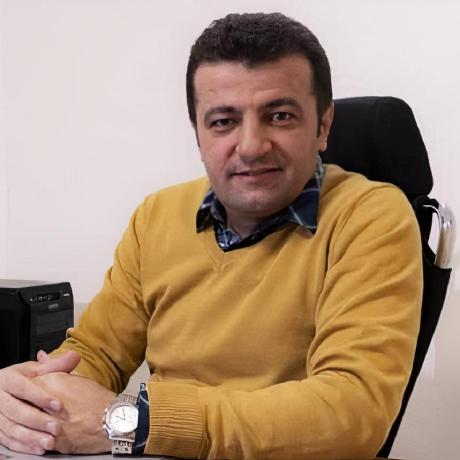
Faculty member at the University of Tehran and Ph.D. in Computer Engineering from Sharif University of Technology and founder/site director of Kurdish Speech. His research spans digital and speech processing, pattern recognition, neural networks, and fuzzy systems.
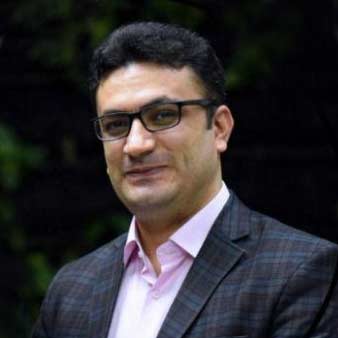
Ph.D. student in Computer Software Engineering at the University of Arak and founder/site director of Kurdish Speech. His work focuses on deep learning, speech recognition, data science, text-to-speech, and product engineering.

Artificial-intelligence researcher with interests in natural language processing and speech recognition.
Artificial-intelligence researcher interested in natural language processing and text-to-speech technology.
Connect with Kurdish Speech to discuss collaboration, language technology, editorial feedback, or a practical AI project.