
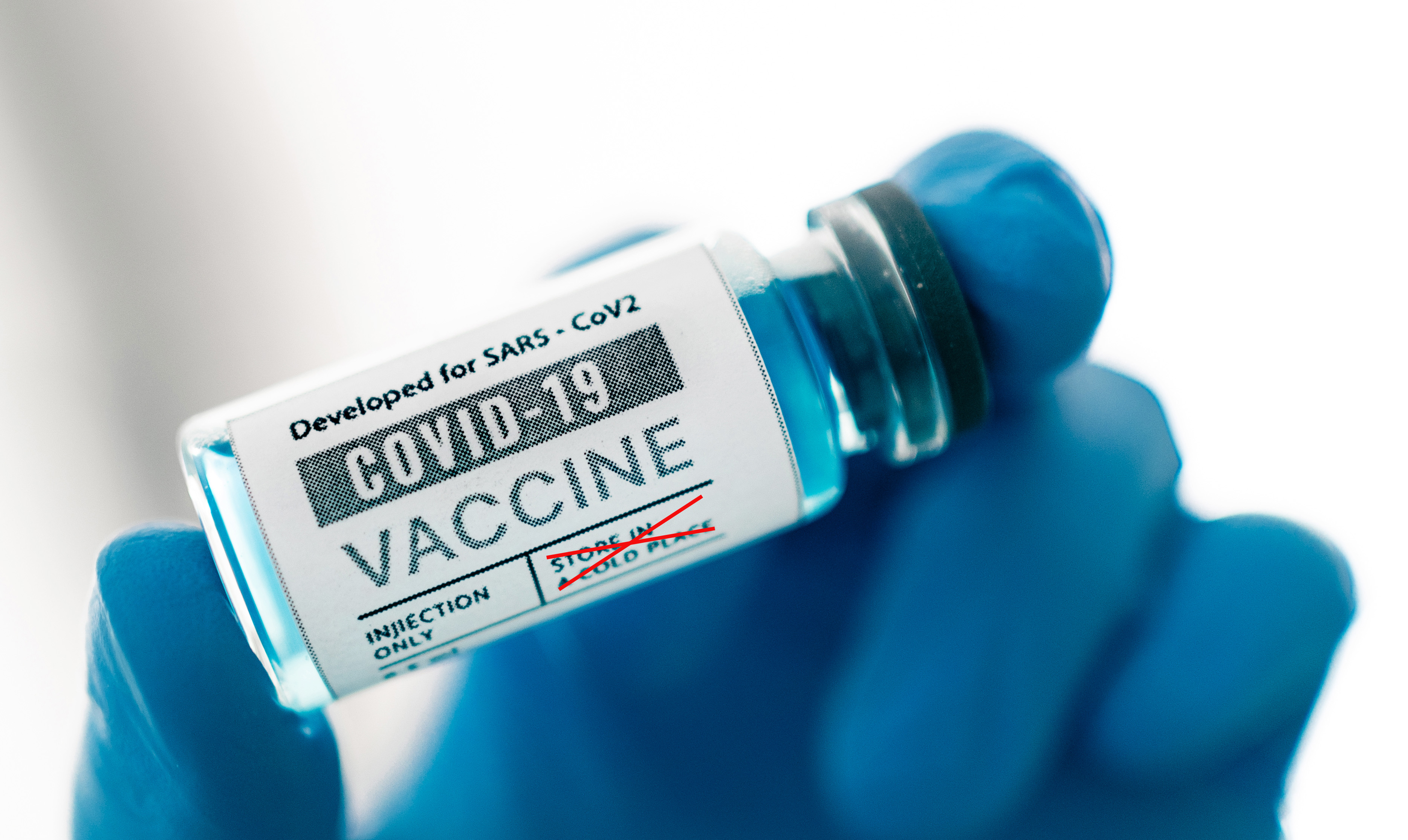
RNA vaccines, which have been proven effective against Covid-19, are now being developed for many other diseases, including cancer. One of the drawbacks to these vaccines is that they require ultracold storage, but researchers from MIT have found a promising way to overcome that limitation. With help from an AI algorithm, the researchers tweaked the formulation surrounding the lipid nanoparticles that are typically used to deliver mRNA vaccines, making the vaccines more heat-resistant. Using this approach, they formulated vaccines that could remain stable even when stored at room temperature for up to a year, or at nearly 100 degrees Fahrenheit for two months. When Covid-19 vaccines carried by these particles were administered to mice, they generated just as strong an immune response as an RNA Covid-19 vaccine similar to one developed by Moderna. By using the AI algorithm to predict the optimal formulations for the particles, the researchers were able to cut down the number of experiments they needed to do, which rapidly sped up the development process. “The real beauty of this algorithm is that we can use it with small data sets,” says Ana Jaklenec, a principal investigator in MIT’s Koch Institute for Integrative Cancer Research. “It’s really hard to run thousands of experiments, so this algorithm allows us to more easily achieve formulations with features that we want — in this case, stability.” Jaklenec and Robert Langer, the David H. Koch Institute Professor, are the senior authors of the paper, which appears today in Nature Biotechnology . Graduate student Jinbi Tian a
Source: MIT News AI